

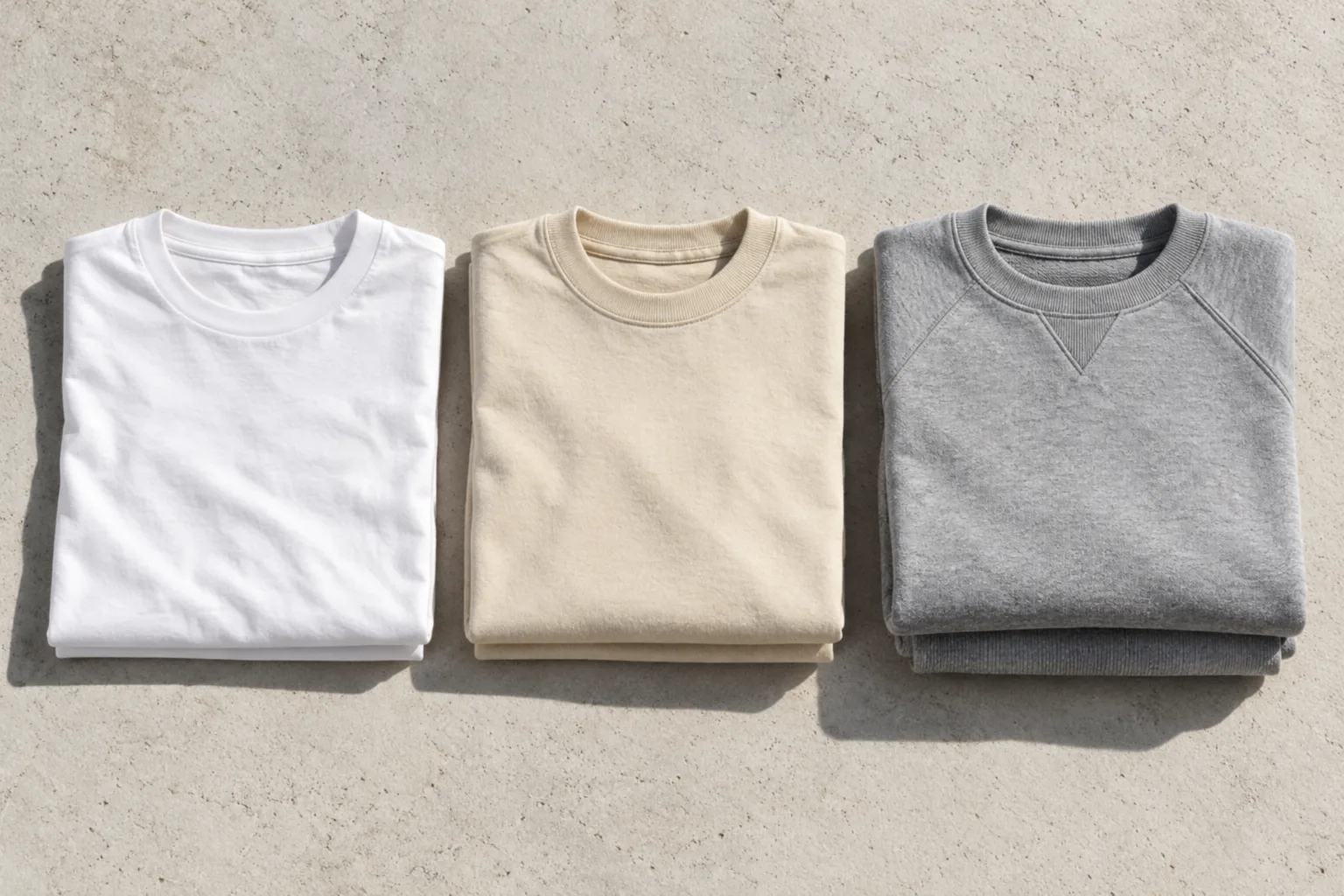
Every Tessel product page names its fabric weight: 180 gsm, 240 gsm, 400 gsm. The number is grams per square meter of fabric, the same measure as for paper. It is the quickest way to tell how a T-shirt or a sweatshirt will feel before you touch it.
In oz/yd², the unit many American labels use, divide by about 34: 180 gsm is 5.3 oz, 240 gsm is 7.1 oz and 400 gsm is 11.8 oz.
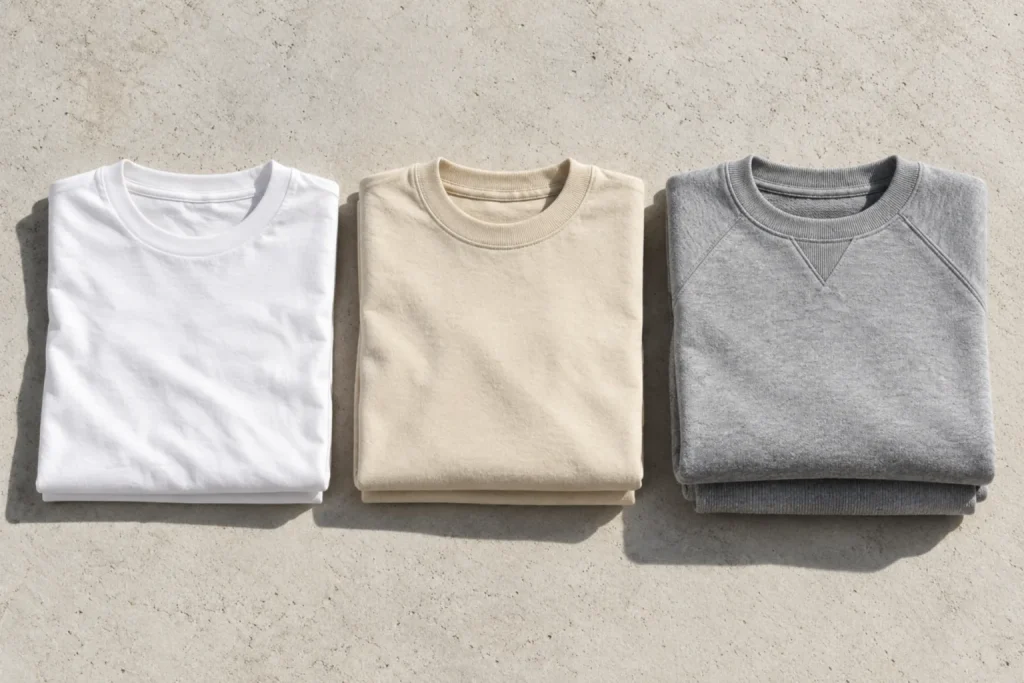
180 gsm: drapes and layers
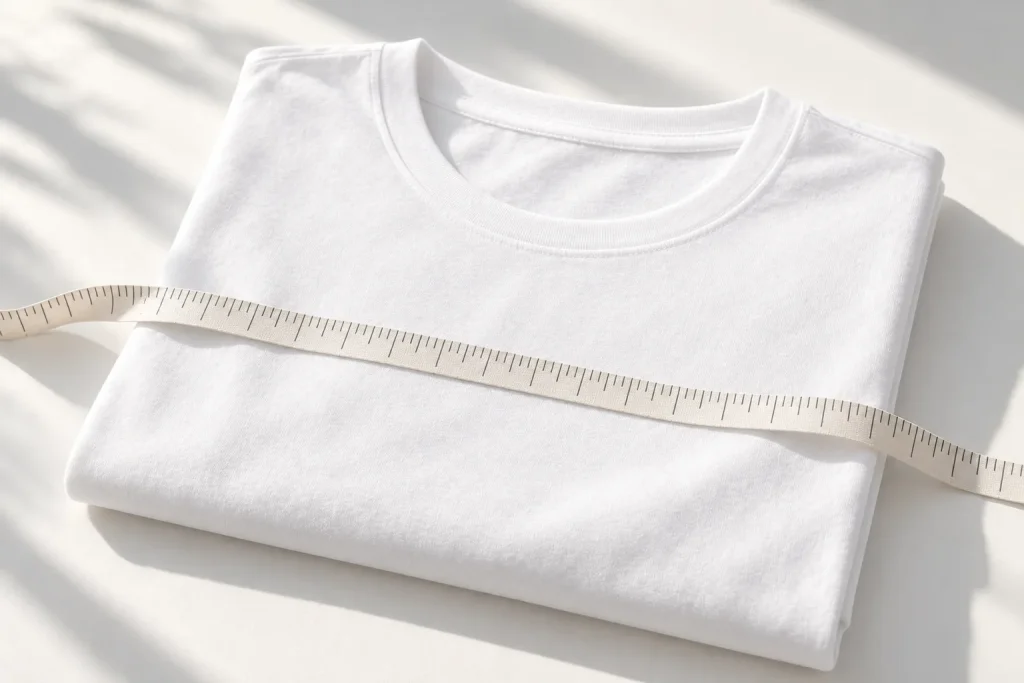
A light, fine jersey that falls close to the body and dries fast. It is our Everyday Tee: cool on a hot day and thin enough to wear under a shirt or a knit without bulk. In White it shows a little of what is underneath.
240 gsm: holds its shape
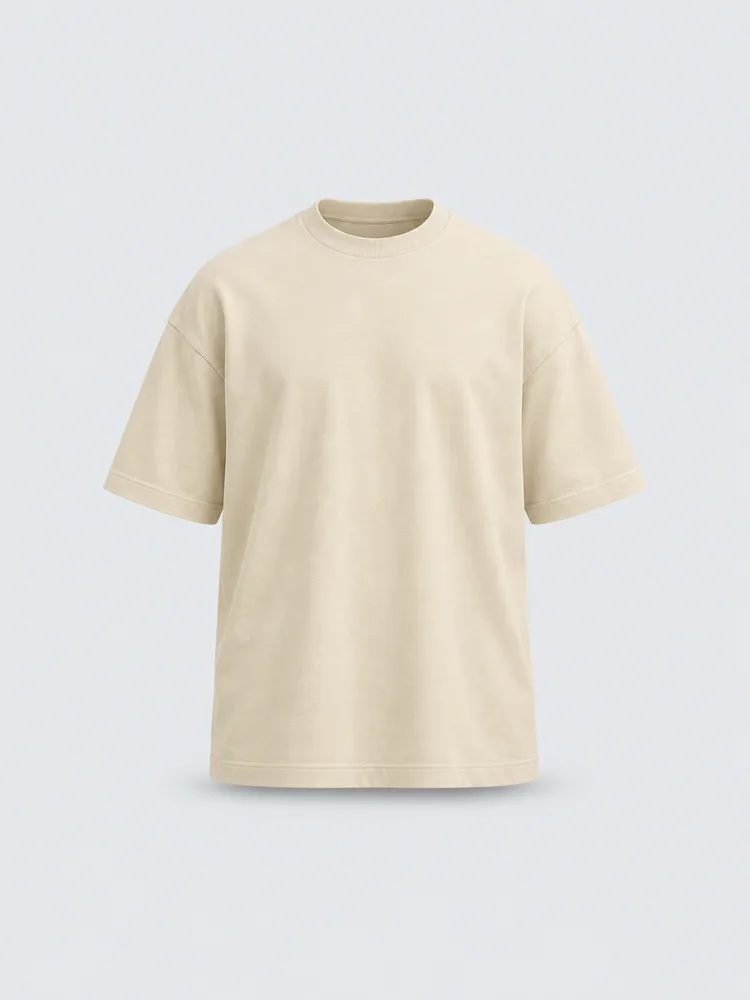
About a third heavier. The jersey is denser and drier to the touch, stands away from the body and keeps its line, which is why the Heavyweight Tee and the Boxy Heavyweight Tee are cut relaxed and boxy. It is opaque even in Ecru and wears well on its own.
400 gsm: keeps you warm
Our loopback for sweats is knitted smooth outside with small loops inside, which hold warm air. The Loopback Crewneck and the Loopback Hoodie are heavy enough to wear as a light jacket on a mild day.
Heavier is not better, only different. Most of us own all three: a 180 for summer and layering, a 240 on its own and a 400 for the evenings.
2 responses
Author
Is the 240 too warm for summer in Phoenix?
Author
For a Phoenix summer we would pick the 180. The 240 is fine on mild days and in air-conditioned offices.
Comments are closed.